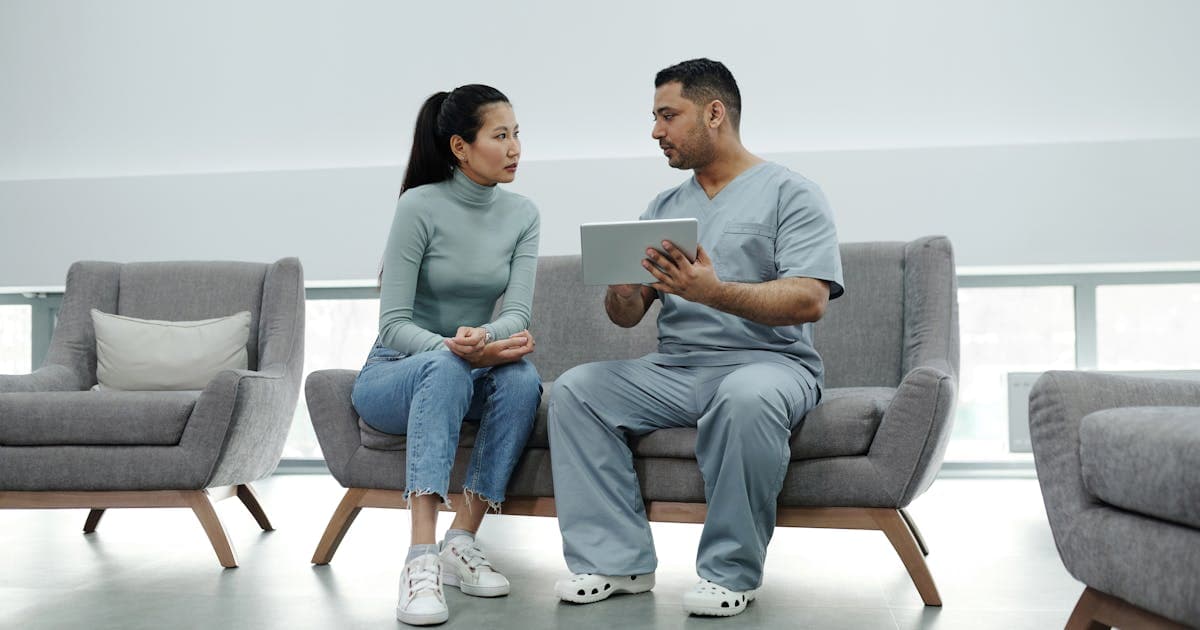
Why You Should Digitize Your Aftercare Messages
Key Takeaways
- 73% of printed aftercare sheets are never looked at again
- Digital aftercare via WhatsApp is timed, interactive, and trackable — paper is static and often lost
- Automated messages arrive at the right time (day 1, day 3, day 7) without staff effort
- Digital aftercare enables two-way communication — patients can report concerns instantly
- Clinics switching from paper to digital see measurable improvements in compliance and outcomes
💡 For clinic owners: Automate patient follow-up via WhatsApp · Get more 5-star Google reviews · Why Google reviews matter for clinics
The Aftercare Problem Nobody Talks About
Here is a scenario that plays out thousands of times a day in clinics around the world. A client walks in, receives a treatment worth $200, $500, or even $2,000. The practitioner has invested years in training. The clinic has invested thousands in equipment, branding, and marketing to get that client through the door. The procedure goes perfectly.
Then, as the client leaves, someone hands them a folded piece of paper with aftercare instructions printed in small font. "Follow these for the next two weeks," they say. The client nods, tucks the sheet into their bag, and walks out.
73% of those printed aftercare sheets are never looked at again.
That piece of paper - the one that is supposed to protect your client's results, prevent complications, and reinforce the value of their visit - ends up crumpled at the bottom of a handbag, left on a kitchen counter, or tossed during a car cleanup. And with it goes the most important part of the client experience: the recovery.
Clinics spend extraordinary effort getting the treatment right. But aftercare - the part that determines whether a client heals well, feels supported, and comes back - is still stuck in the 1990s. Paper sheets, verbal reminders, and the hope that clients will remember what they were told while still groggy from their procedure.
It is time to talk about why that does not work and what to do instead.
What Happens When Aftercare Stays on Paper
The problems with paper-based aftercare are not theoretical. They show up in your reviews, your rebooking rates, and your inbox every single week.
The Lost Sheet Problem
Clients lose things. They especially lose a single sheet of paper handed to them at the end of an appointment when they are distracted, possibly in discomfort, and thinking about getting home. By the time they actually need those instructions - at 11 PM when their skin is red and they cannot remember if they are allowed to use moisturizer - the sheet is nowhere to be found.
The 11 PM Google Spiral
Without accessible aftercare guidance, clients turn to Google for answers. They search "swelling after Botox is it normal" or "red skin 3 days after chemical peel" and land on forum posts, outdated articles, and worst-case-scenario threads. This creates unnecessary anxiety, damages their trust in your clinic, and sometimes leads them to take actions that actually harm their recovery.
No Traceability
With paper instructions, you have no idea whether a client read them. You do not know if they followed the guidance or ignored it entirely. If a complication arises and the client says "nobody told me that," you have no record to reference. This is a liability gap that grows with every client you see.
Inconsistent Care Quality
When aftercare depends on verbal explanations, quality varies wildly. The instructions a client receives from your senior practitioner on a quiet Tuesday are completely different from what a junior team member delivers during a Friday rush. Different wording, different emphasis, different levels of detail. Your clients notice.
Staff Answering the Same Questions on Repeat
"Can I exercise today?" "Is bruising normal?" "When should I come back?" Your front desk and practitioners field the same 10-15 questions dozens of times a week. Each answer takes 3-5 minutes of staff time. Multiply that across all your clients and you are looking at hours of productive time lost to questions that well-timed aftercare messages would have preempted.
5 Reasons to Digitize Your Aftercare Messages
Moving from paper to digital aftercare is not about chasing trends. It is about solving real problems that directly affect your client outcomes and your bottom line.
1. Messages Arrive When They Are Actually Relevant
Paper instructions front-load all the information at once. A sheet handed out after a dermal filler appointment contains guidance for day 0, day 1, day 3, day 7, and day 14 - all crammed onto a single page. Clients cannot absorb all of that in one sitting, and most of it is not relevant yet.
Digital aftercare delivers the right information at the right time. On day 0, the client gets immediate post-treatment care. On day 3, they get reassurance about the recovery timeline. On day 7, they get a progress check-in. Each message is relevant to exactly what they are experiencing at that moment. This is not just more convenient - it is more effective for clinical outcomes.
2. 98% Open Rate on WhatsApp vs 21% for Email
The channel matters as much as the content. Email aftercare campaigns average a 21% open rate - meaning nearly 4 out of 5 messages go unread. SMS performs better at around 90%, but many clients find it impersonal and associate it with spam.
WhatsApp messages achieve a 98% open rate, and 90% of those are read within 3 minutes of delivery. When you send aftercare instructions via WhatsApp, they are virtually guaranteed to be seen. Your carefully written guidance actually reaches the client instead of sitting unread in a cluttered inbox.
3. Two-Way Communication Catches Concerns Early
A paper sheet is a one-way broadcast. If a client has a question or concern, their only options are to call the clinic (often outside business hours), send an email and wait, or worry in silence.
Digital aftercare opens a two-way channel. Clients can reply to aftercare messages with questions or concerns. Systems like PostCare include AI-powered assistants that handle routine questions instantly - even at 2 AM on a Sunday. For more serious concerns, the system flags them for your clinical team to review.
Early detection of complications is one of the highest-value outcomes of digital aftercare. A concern caught on day 2 is almost always easier and cheaper to address than one that escalates to day 7 because the client did not know how to reach you.
4. Consistent Care for Every Single Client
With automated digital aftercare, your Monday morning client and your Friday afternoon client receive identical quality of post-treatment communication. There is no variation based on which practitioner performed the procedure, how busy the clinic was, or whether someone forgot to print the aftercare sheet.
This consistency does more than protect individual clients. It builds your clinic's reputation as a professional, reliable practice where every client is treated with the same standard of care. That reputation is what drives referrals, reviews, and long-term growth.
5. Measurable Results and Clear ROI
Paper aftercare is a black box. You print it, hand it out, and hope for the best. You have no data on whether clients read it, when they read it, or how it impacted their recovery.
Digital aftercare gives you visibility into every touchpoint. You can track delivery rates, open rates, client responses, concern rates by procedure type, and rebooking patterns. This data lets you continuously improve your aftercare protocols and measure the direct impact on client retention and satisfaction.
Clinics using automated aftercare report measurable improvements within 60-90 days: higher retention rates, more positive reviews, fewer after-hours calls, and reduced complication escalation.
The Real Cost of NOT Digitizing
Choosing to stay with paper aftercare is not a neutral decision. It has real, quantifiable costs that compound over time.
Lost Clients
68% of first-time clients who receive no post-treatment follow-up do not return. For a clinic seeing 80 new clients per month with an average treatment value of $300, that is 54 clients lost every month. At a client acquisition cost of $200-400 each, you are spending $10,800-$21,600 per month to acquire clients you immediately lose.
Negative Reviews
Clients who feel unsupported during recovery are disproportionately likely to leave negative reviews. A single one-star Google review mentioning "no aftercare" or "felt abandoned after treatment" can deter dozens of prospective clients. One study found that a half-star decrease in a clinic's Google rating correlates with a 5-9% drop in revenue.
Preventable Complications
When clients do not follow aftercare instructions - because they lost the paper, misunderstood the verbal guidance, or could not remember the details - minor issues become major ones. What could have been managed with a simple "avoid direct sunlight for 48 hours" reminder becomes a hyperpigmentation case that requires corrective treatment, a refund, or worse.
Staff Burnout
Your team did not train for years in aesthetics or dentistry to spend their evenings answering the same WhatsApp questions about swelling. Repetitive post-treatment inquiries are one of the top contributors to staff burnout in clinical settings. When your best practitioners leave because the workload is unsustainable, the cost of replacement far exceeds the cost of aftercare automation.
Missed Rebookings
Without a well-timed prompt, most clients simply forget to rebook. They meant to, but life got busy. Research shows that if a client does not rebook within 30 days of their procedure, the probability of them returning drops by 60%. A simple automated message at the right time can be the difference between a one-time visit and a long-term client relationship.
What Digital Aftercare Looks Like in Practice
If you have never seen automated aftercare in action, here is what the workflow looks like from start to finish.
Step 1: Client receives treatment. Business as usual - nothing changes about your clinical workflow.
Step 2: Practitioner enrolls the client. This takes about 15-30 seconds. Select the client, select the procedure, and confirm. That is it.
Step 3: Automated messages begin. The client receives their first WhatsApp message within hours of treatment - a check-in with immediate post-treatment care instructions.
Step 4: Timed follow-ups over the coming days and weeks.
- Day 0 - Immediate aftercare instructions and what to expect tonight
- Day 1 - Check-in on how they are feeling, with day-1-specific guidance
- Day 3 - Recovery milestone reassurance, common questions at this stage
- Day 7 - Progress update, guidance on resuming normal activities
- Day 14 - Final check-in, rebooking prompt, and review request
Step 5: Client can reply at any time. If they have a question or concern, they simply respond to the WhatsApp message. Routine questions get answered instantly by the AI assistant. Concerns are flagged for your team.
The entire process requires less than 30 seconds of staff time per client. Everything else is automatic.
But My Clients Prefer Paper...
This is the most common pushback practitioners raise, and it usually comes from one of three places. Let us address each one directly.
"My Clients Are Older and Not Tech-Savvy"
WhatsApp has 2.7 billion monthly active users worldwide. In most countries, it is the default messaging app across all age demographics. If your client has a smartphone - and in 2026, that includes the vast majority of adults over 60 - they already know how to read a WhatsApp message. There is no app to download, no account to create, no learning curve. It is a text message in an app they already use every day.
For the rare client who genuinely does not use WhatsApp, you can still provide paper instructions as a backup. Digitizing your aftercare does not mean eliminating paper entirely - it means making paper the exception, not the default.
"Automated Messages Feel Impersonal"
This is a perception problem, not a reality one. Consider which feels more caring to a client:
- Option A: A paper sheet they cannot find at 10 PM when they have a question
- Option B: A personalized WhatsApp message that arrives at exactly the right time, addresses them by name, references their specific procedure, and invites them to reply if they have concerns
Well-written aftercare messages feel attentive and professional, not robotic. The clients who rave about "amazing aftercare" in their Google reviews are almost always describing automated sequences - they just do not realize it because the experience felt so natural and well-timed.
The truly impersonal experience is handing someone a generic printout and hoping for the best.
"It Is Too Expensive to Set Up"
Aftercare automation tools like PostCare start at $39.99 per month. Compare that to the cost of a single lost client (average lifetime value of $1,500-5,000), a single negative review (potential revenue impact of thousands), or a single hour of staff time spent answering repetitive aftercare questions.
Most clinics achieve a positive ROI within the first month. The math is not close.
How to Make the Switch
Transitioning from paper to digital aftercare is simpler than most clinic owners expect. Here is a three-step approach that works.
Step 1: Choose Your Channel
WhatsApp is the recommended channel for aftercare messages. Its near-universal adoption, 98% open rate, and two-way messaging capability make it the clear leader over email, SMS, or dedicated apps that clients have to download.
Step 2: Use Pre-Built Sequences or Create Your Own
You do not need to write aftercare messages from scratch. PostCare comes with over 75 ready-to-use aftercare sequences covering aesthetic treatments (Botox, fillers, chemical peels, laser), dental procedures (implants, veneers, whitening), beauty services (lash extensions, microblading, hair treatments), and more.
Each sequence includes professionally written messages timed to the specific recovery milestones of that procedure. You can use them as-is, customize the wording to match your clinic's voice, or create entirely new sequences for specialized treatments.
Step 3: Start With One Treatment and Expand
You do not need to digitize everything on day one. Pick your most common procedure - the one you perform 10 or more times per week - and start there. Enroll clients in the digital aftercare sequence for that single treatment.
Within two weeks, you will see the difference: fewer aftercare calls, clients mentioning the follow-up messages positively, and a clear picture of how the system works. Then expand to your second most common procedure, then your third, and so on.
Most clinics are fully digitized across all their treatments within 30 days of starting.
Frequently Asked Questions
Is digital aftercare messaging compliant with healthcare privacy regulations?
Yes, when implemented correctly. WhatsApp messages are end-to-end encrypted. PostCare does not include sensitive medical details in messages - the content focuses on general aftercare guidance and check-ins. Always ensure your messaging practices align with your local regulations regarding patient communication.
What happens if a client does not have WhatsApp?
While WhatsApp covers the vast majority of clients globally, you can maintain paper instructions as a fallback for the small percentage who do not use the platform. The goal is to make digital the default, not the only option.
How long does it take to see results after switching to digital aftercare?
Most clinics notice a reduction in after-hours calls and repetitive questions within the first week. Measurable improvements in client retention and review generation typically become visible within 60-90 days as the first cohort of digitally supported clients moves through their rebooking window.
Can I customize the messages for my clinic's tone and brand?
Absolutely. Pre-built sequences provide a proven starting point, but every message can be edited to match your clinic's voice, add your specific protocols, or include personalized touches. Some clinics also use AI tools to generate custom sequences for specialized treatments.
Will this replace the need for my staff to communicate with clients?
No - and it should not. Digital aftercare handles the predictable, repetitive communication: standard instructions, timed check-ins, and recovery reassurance. This frees your staff to focus on the communication that truly requires a human touch: responding to specific clinical concerns, building relationships, and providing the personal attention that defines great care.
Time to Leave Paper Behind
The gap between how clinics deliver treatment and how they deliver aftercare has never been wider. You use digital booking systems, electronic health records, and sophisticated treatment technology. But when it comes to the single most important factor in client retention and satisfaction - post-treatment care - too many clinics are still relying on a folded piece of paper.
Digitizing your aftercare is not a luxury. It is the logical next step for any clinic that takes client outcomes, retention, and reputation seriously.
The clinics that make this shift now will build stronger client relationships, generate more positive reviews, reduce complications, and free their teams to focus on what they do best - delivering excellent care.
The clinics that wait will keep losing clients to competitors who figured it out first.
PostCare makes the switch simple. Over 75 pre-built aftercare sequences, WhatsApp delivery with 98% open rates, two-way communication, AI-powered concern detection, and setup that takes minutes, not weeks.
Start your free trial and send your first digital aftercare message today. Your clients - and your bottom line - will notice the difference immediately.
Related Reading
Stop printing aftercare guides
Automate sending personalized aftercare instructions to every client via WhatsApp.