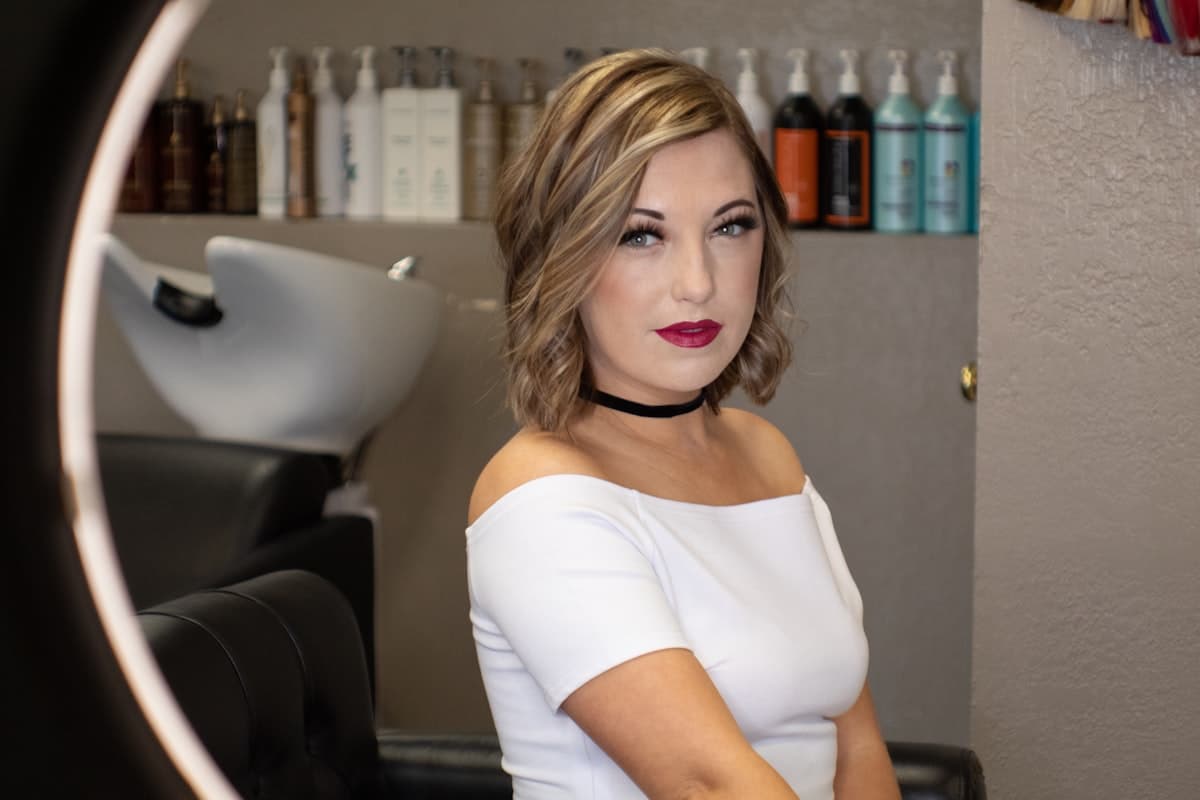
Beauty Salon Client Retention: 5 Strategies That Actually Work in 2026
Key Takeaways
- Acquiring a new client costs 5-7x more than retaining an existing one
- A 5% increase in retention can boost profits by 25-95%
- A monthly client has a lifetime value of $2,880-5,400 vs. $80-150 for a one-time visit
- Post-appointment aftercare messaging is the #1 strategy for driving repeat bookings
- Automated WhatsApp follow-ups increase rebooking rates by up to 35%
💡 For clinic owners: Automate patient follow-up via WhatsApp · Get more 5-star Google reviews · Why Google reviews matter for clinics
Why Beauty Salon Client Retention Beats Acquisition Every Time
Here is a number that should change how you think about your beauty salon business: acquiring a new client costs 5-7 times more than retaining an existing one. Yet most salon owners spend the vast majority of their marketing budget on attracting new faces through the door, while doing almost nothing to keep the clients they already have coming back.
The math of beauty salon client retention is compelling. A client who visits your salon once and never returns has a lifetime value of perhaps $80-150. A client who returns monthly for 3 years has a lifetime value of $2,880-5,400. The difference between those two outcomes often comes down to what happens in the days after their first visit.
According to industry research, increasing client retention by just 5% can boost profits by 25-95%. For a beauty salon doing $20,000/month in revenue, a 5% retention improvement could mean an additional $5,000-19,000 in annual profit. The question is not whether retention matters - it is which strategies actually move the needle.
The Aftercare Gap: Where Most Salons Lose Clients
Between the moment a client walks out of your salon and the moment they think about booking again, there is a critical gap. During this period, three things happen that determine whether they come back.
They evaluate their results. Did the treatment deliver what was promised? For skin treatments, the results often evolve over days or weeks. Without guidance on what to expect, clients may judge their results prematurely.
They experience the aftercare period. Chemical peels need specific post-care. Lash extensions require maintenance instructions. Facials may cause temporary redness. Without aftercare support, clients feel abandoned during the most vulnerable phase.
They forget about you. Life gets busy. Without a prompt, the intention to rebook fades. By the time they think about it again, they might try a different salon that showed up in a Google search.
This aftercare gap is the single biggest opportunity for improving beauty salon client retention. Close the gap, and retention follows naturally.
Strategy 1: Automated Aftercare Messaging
The most impactful retention strategy for beauty salons is also the most underutilized: sending timed aftercare messages after every treatment.
Why Aftercare Messaging Works
When a client receives a WhatsApp message from your salon the evening after their facial, explaining what to expect and how to care for their skin, something powerful happens. They feel cared for. They see your salon as professional and attentive. They trust that you know what you are doing.
This is not just good customer service - it is retention psychology. The peak-end rule in behavioral science shows that people judge experiences primarily by their peak moment and the final impression. An aftercare message transforms the "ending" of the salon experience from walking out the door to receiving personalized care guidance.
What to Send and When
For a typical beauty salon treatment, an effective aftercare sequence looks like this:
Same day (2-3 hours after): Thank the client by name, provide immediate care instructions specific to their treatment. For example, after a chemical peel: "Avoid direct sun, apply the recommended moisturizer, and skip active ingredients for 48 hours."
Day 1: Check-in message asking how their skin feels, with reassurance about normal post-treatment effects. "Light redness and slight tightness are completely normal after your peel - this means the treatment is working."
Day 3-5: Results-focused message. "You should start noticing smoother skin texture around now. Continue with gentle cleansing and SPF 30+."
Day 7-14: Maintenance advice and a soft rebooking prompt. "To maintain your results, we recommend scheduling your next treatment in 4-6 weeks. Want us to reserve your preferred time?"
Making It Automatic
Manually sending these messages to every client is not sustainable. Even a salon doing 15 treatments per day would need to send 60 individual messages daily. That is why automation is essential.
PostCare for beauty salons provides pre-written aftercare sequences for facials, chemical peels, microdermabrasion, lash extensions, and other common beauty treatments. Each sequence is timed to the specific treatment type and sent automatically via WhatsApp - the channel with a 98% open rate.
Your staff enrolls the client in about 15 seconds after their treatment, and PostCare handles the rest. The client receives personalized, professional aftercare messages without any ongoing effort from your team.
Strategy 2: Strategic Loyalty Programs
Loyalty programs are common in beauty salons, but most are poorly designed. A generic "10th visit free" punch card does not create genuine loyalty - it creates price sensitivity.
What Works
Tiered benefits: Create 3 levels (Silver, Gold, Platinum) based on annual spending. Higher tiers unlock genuine perks - priority booking, exclusive services, birthday treatments, or complimentary add-ons.
Experience-based rewards: Instead of discounts (which train clients to wait for deals), reward with experiences. A free scalp massage add-on is more memorable than 10% off and costs you less.
Birthday program: Send a personalized birthday message with a complimentary treatment or upgrade. This single touchpoint has one of the highest conversion rates of any retention tactic - the rebooking rate after a birthday offer typically exceeds 60%.
What Does Not Work
- Complicated point systems that clients cannot understand
- Discounts that devalue your services
- Programs that reward infrequent visits (e.g., "come back within 60 days for 20% off" - this trains clients to visit less often)
- Paper-based tracking that gets lost
Loyalty Program ROI
A well-designed loyalty program typically costs 3-5% of revenue in rewards but increases client lifetime value by 15-25%. For a salon generating $25,000/month, that is $750-1,250/month invested for $3,750-6,250/month in additional lifetime revenue.
Strategy 3: Proactive Rebooking Prompts
Most clients intend to come back - they just forget to book. The data shows that if a client does not rebook within 2 weeks of their visit, the probability of them returning drops by 40%.
The Rebooking Window
The optimal time to prompt a rebooking depends on the treatment:
| Treatment | Ideal rebooking prompt | Recommended frequency |
|---|---|---|
| Facials | Day 21-25 | Every 4-6 weeks |
| Chemical peels | Day 25-28 | Every 4-6 weeks |
| Lash extensions | Day 14-18 | Every 2-3 weeks (fills) |
| Waxing | Day 21-28 | Every 4-6 weeks |
| Microdermabrasion | Day 25-30 | Every 4-6 weeks |
| Brow services | Day 18-21 | Every 3-4 weeks |
How to Prompt Without Being Pushy
The key is framing the rebooking as care, not sales. Compare these two approaches:
Pushy: "Time to book your next appointment! We have openings this week."
Caring: "Hi Sarah, it has been 3 weeks since your facial. Based on your skin type, this is the ideal time to schedule your next session to maintain your results. Would you like your usual Thursday afternoon slot?"
The second approach works because it:
- Uses the client's name
- References the specific treatment
- Provides a reason rooted in the client's benefit
- Offers a specific, convenient option
Automating Rebooking Prompts
When aftercare sequences include a rebooking prompt in the final message, the rebooking rate is 35-45% higher than salons that rely on clients remembering to book on their own. This is because the prompt arrives at exactly the right moment, through a channel the client actually reads.
Strategy 4: Review Generation and Reputation Management
Online reviews are both a retention and acquisition tool. But here is the retention angle most salons miss: clients who leave a positive review are 70% more likely to rebook. The act of publicly recommending your salon reinforces their own commitment to returning.
How to Generate Reviews Consistently
Timing matters: Ask for a review when satisfaction is highest. For beauty treatments, this is typically 3-7 days after the appointment, when the results are visible but the experience is still fresh.
Make it effortless: Send a direct link to your Google Business Profile review form. Every additional click reduces completion by 50%. A single-tap link in a WhatsApp message has the highest conversion rate.
Personalize the ask: "Hi Emma, we hope you are loving your new look after Friday's treatment! If you have a moment, a quick Google review would mean a lot to our small team." This outperforms a generic "please leave us a review" by 3x.
Handling Negative Feedback
Negative reviews will happen. The retention opportunity is in your response:
- Respond within 24 hours - publicly and professionally
- Acknowledge the concern without being defensive
- Offer to make it right - invite them back for a complimentary correction
- Follow up privately to resolve the issue
Clients whose complaints are handled well have a 70% chance of returning. Clients whose complaints are ignored have a 5% chance. The difference in lifetime value is enormous.
Strategy 5: Personalization at Scale
Clients return to salons where they feel known. The challenge for growing salons is maintaining that personal touch as your client list grows from 50 to 500 to 5,000.
Data-Driven Personalization
Track and use three categories of client data:
Treatment history: Know what each client has had done, when, and what products were used. "Welcome back, Maria. Last time we used the vitamin C serum after your facial - shall we continue with that, or would you like to try the new hyaluronic formula?"
Preferences: Note their preferred appointment times, stylist, music preferences, beverage choices, and conversation style. These small details create a VIP experience.
Skin/hair profile: Record skin type, sensitivities, allergies, and treatment responses. This ensures consistent, safe service and demonstrates professional expertise.
Personalized Communication
Beyond the appointment itself, personalize your ongoing communication:
- Seasonal tips based on their treatment history ("As winter approaches, your sensitive skin will benefit from switching to a richer moisturizer")
- Product recommendations based on their specific concerns
- Relevant new service announcements ("We have added LED therapy, which pairs perfectly with the facials you love")
- Anniversary messages ("It has been one year since your first visit - thank you for trusting us with your skincare!")
The Technology Balance
Personalization at scale requires some technology - a good client management system at minimum. But the technology should be invisible to the client. They should feel individually remembered, not processed through a CRM.
Measuring Beauty Salon Client Retention
You cannot improve what you do not measure. Track these metrics monthly:
Key Retention Metrics
Client retention rate: The percentage of clients who return within a defined period (typically 90 days). Formula: (Clients who returned / Total clients in period) x 100. A healthy beauty salon retention rate is 60-70%.
Average visit frequency: How often, on average, clients return. For beauty salons, the target is typically every 4-6 weeks for regular treatments. Track this by treatment type.
Client lifetime value (CLV): Average spend per visit x Average visits per year x Average years as a client. This number tells you exactly how much each retained client is worth.
Rebooking rate: The percentage of clients who book their next appointment before leaving or within 7 days. Target: 50%+.
Lapse rate: The percentage of clients who have not visited in 90+ days. If this exceeds 30%, you have a retention problem.
Setting Benchmarks
| Metric | Poor | Average | Good | Excellent |
|---|---|---|---|---|
| Retention rate (90-day) | <40% | 40-55% | 55-70% | >70% |
| Rebooking rate | <20% | 20-35% | 35-50% | >50% |
| Visit frequency | >8 weeks | 6-8 weeks | 4-6 weeks | <4 weeks |
| Lapse rate | >40% | 25-40% | 15-25% | <15% |
The ROI of Automated Follow-Ups for Beauty Salons
Let us put real numbers on what automated aftercare and follow-up messaging delivers for a beauty salon.
Scenario: A Mid-Size Beauty Salon
- 200 unique clients per month
- Average spend: $85 per visit
- Current retention rate: 45% (90-day)
- Current rebooking rate: 25%
After Implementing Automated Aftercare
Based on industry data from salons that have implemented WhatsApp-based aftercare messaging:
- Retention rate improves to 60% (+15 percentage points)
- Rebooking rate improves to 40% (+15 percentage points)
- Average visit frequency improves from every 7 weeks to every 5.5 weeks
Financial Impact
| Metric | Before | After | Annual Difference |
|---|---|---|---|
| Monthly returning clients | 90 | 120 | +30 clients/month |
| Additional monthly revenue | - | $2,550 | $30,600/year |
| Reduced acquisition cost | - | $450/month | $5,400/year |
| Total annual impact | - | - | $36,000 |
Against a PostCare subscription of $79.99-149.99/month ($960-1,800/year), the ROI is 20-37x. Check PostCare pricing for details.
Frequently Asked Questions
What is a good retention rate for a beauty salon?
A good 90-day client retention rate for a beauty salon is 55-70%. If you are below 55%, there is significant room for improvement. Above 70% is excellent and typically indicates strong aftercare practices and client relationships.
How quickly do retention improvements show results?
Aftercare messaging typically shows measurable results within 30-60 days - you will see more clients rebooking after their treatment sequences complete. Full financial impact usually becomes clear within 3-6 months as the cumulative effect of improved retention compounds.
Should I offer discounts to retain clients?
Generally, no. Discounts attract price-sensitive clients and train regular clients to wait for deals. Instead, focus on value-adding strategies - aftercare messaging, personalized experiences, and loyalty programs that reward with experiences rather than price reductions.
How do I win back lapsed clients?
For clients who have not visited in 90+ days, a personalized "we miss you" message with a specific offer (complimentary treatment upgrade, not a discount) can reactivate 15-20% of lapsed clients. The message should acknowledge the gap without guilt-tripping.
Is WhatsApp better than email for salon client communication?
Yes, significantly. WhatsApp has a 98% open rate compared to email's 21% in the beauty sector. Clients read WhatsApp messages within minutes, compared to hours or days for email. For time-sensitive aftercare instructions and rebooking prompts, WhatsApp outperforms email by every measurable metric.
What is the most cost-effective retention strategy?
Automated aftercare messaging via WhatsApp delivers the highest ROI of any single retention strategy. It costs relatively little (a monthly subscription), requires minimal staff time (15 seconds per enrollment), and directly impacts both retention rate and rebooking rate. It is also the strategy that most salons are not yet doing, which means early adopters gain a competitive advantage.
Turn Aftercare Into Your Competitive Advantage
Beauty salon client retention comes down to a simple principle: make your clients feel cared for after they leave, and they will come back. PostCare automates this for you - sending professional aftercare messages via WhatsApp after every facial, peel, and beauty treatment. Your clients get expert guidance at the right moments, and your salon builds the kind of loyalty that transforms one-time visitors into regulars. See how PostCare works for beauty salons, or explore pricing plans to find the right fit for your salon.
Related Reading
Stop printing aftercare guides
Automate sending personalized aftercare instructions to every client via WhatsApp.