Blepharoplasty Aftercare: The Complete Eyelid Surgery Recovery Guide
Key Takeaways
- Cold compresses are essential for the first 48 hours — 10 minutes on, 10 minutes off
- Swelling and bruising peak at days 2-3 and largely resolve by week 2
- Use prescribed eye drops to prevent dryness during healing
- Avoid bending over, straining, and screen time for the first week
- Incision scars fade significantly over 3-6 months and become nearly invisible
Why Blepharoplasty Aftercare Matters for Your Results
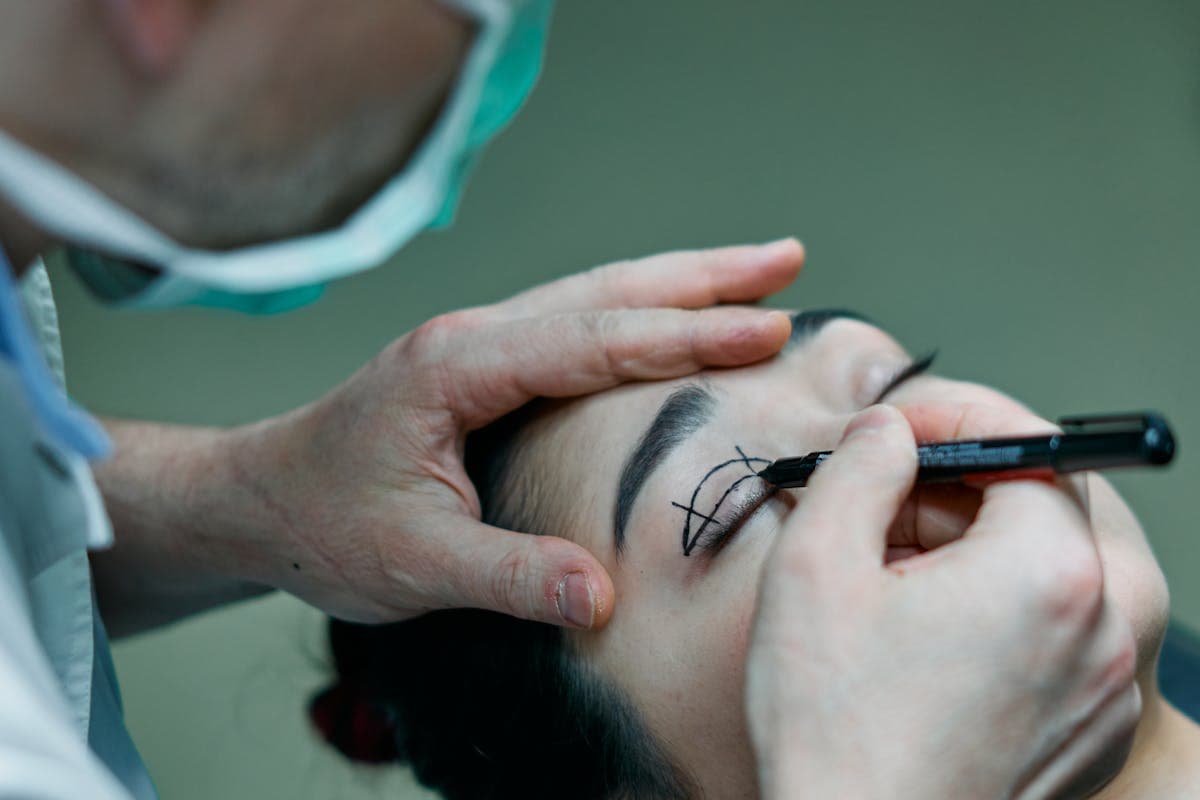
Blepharoplasty (eyelid surgery) is one of the most popular facial rejuvenation procedures, often performed alongside rhinoplasty or facelifts, removing excess skin and fat from the upper eyelids, lower eyelids, or both. The surgery itself takes 1-2 hours, but the delicate eye area requires careful aftercare to ensure optimal healing and minimize visible scarring.
The periorbital area is one of the most visible parts of the face, and even minor healing complications can affect the final appearance. Proper aftercare reduces the risk of complications like dry eyes, excessive scarring, and asymmetric healing.
The First 48 Hours: Cold Compresses and Rest
What to Expect After Surgery
Patients leave with the eye area swollen, bruised, and sometimes partially closed. This is entirely normal. Common experiences:
- Significant swelling around both eyes, even if only one lid was treated
- Bruising that can extend from the eyelids to the cheeks
- Blurred or double vision (temporary, from ointment and swelling)
- Watery or dry eyes (tear production may be temporarily disrupted)
- Sensitivity to light
- Tightness when blinking or closing the eyes
Cold Compresses: The #1 Priority
Cold compresses are the most important aftercare tool for the first 48-72 hours. They dramatically reduce swelling, bruising, and discomfort.
How to apply:
- Use clean, damp gauze pads chilled in the refrigerator, or gel eye masks kept in the freezer
- Apply gently over closed eyes for 10-15 minutes, then remove for 10-15 minutes
- Continue this cycle as much as possible during waking hours for the first 48-72 hours
- Never apply ice directly to the eyelids
Eye Care
- Apply prescribed eye drops and ointment as directed. Lubricating drops prevent dryness. Antibiotic ointment prevents infection.
- Keep eyes clean. Gently clean the eyelid margins with a cotton swab dipped in sterile saline or as directed.
- Do not rub your eyes. This is critical. Rubbing can disrupt sutures and cause bleeding.
- Wear dark sunglasses when outdoors and even indoors if light sensitivity is significant.
Head Elevation
Sleep with the head elevated on 2-3 pillows for the first 1-2 weeks. This reduces swelling significantly and prevents blood from pooling around the eyes.
First 48-Hour Restrictions
- No reading, screens, or close work for 48-72 hours (eye strain increases swelling)
- No contact lenses for at least 2 weeks
- No eye makeup for 2-3 weeks
- No bending over or lifting (increases blood pressure to the head)
- No aspirin or ibuprofen (increases bruising risk)
Week 1: Suture Removal and Early Healing
Days 3-5: Peak Bruising
Bruising typically peaks at days 3-5, then begins to resolve. The color progression is purple to blue to green to yellow, fully resolving in 2-3 weeks.
Suture Removal (Days 5-7)
External sutures are typically removed at 5-7 days. This is quick and minimally uncomfortable. After suture removal:
- Continue gentle cleansing of the incision line
- Begin applying prescribed scar treatment (silicone gel or strips)
- Avoid any tension on the healing incision
Vision Changes
Mild blurriness from ointment and swelling is normal. Vision should improve steadily over the first week. However, report any of the following immediately:
- Sudden vision loss or significant change
- Severe eye pain (different from mild soreness)
- Seeing flashes of light or new floaters
- Inability to close the eye completely
Returning to Daily Activities
Most patients return to desk work and light activities at 7-10 days. Driving can resume when vision is clear and you are off pain medication (usually 5-7 days).
Weeks 2-4: Visible Recovery
Swelling Timeline
- Week 1: Maximum swelling. Eyes may appear nearly closed.
- Week 2: Significant improvement. Most bruising is fading. Eyes open more naturally.
- Week 3: About 70-80% of swelling resolved. Patients feel comfortable in public.
- Week 4: Most visible swelling gone. Subtle swelling continues.
Resuming Eye Makeup and Contact Lenses
- Contact lenses: Can resume at 2-3 weeks
- Eye makeup: Can resume at 2-3 weeks, using clean, new products
- Waterproof or heavy makeup: Wait until 4 weeks
- Eyelash extensions: Wait at least 6-8 weeks
Activity Restrictions
- Light exercise (walking): Can resume at 1-2 weeks
- Moderate exercise: 3-4 weeks
- Swimming and diving: 4-6 weeks
- Contact sports: 6 weeks minimum
Months 1-6: Scar Maturation and Final Results
Scar Care
Upper blepharoplasty scars hide in the natural eyelid crease. Lower blepharoplasty scars sit just below the lash line or are hidden inside the eyelid (transconjunctival approach).
Scar evolution:
- Weeks 2-6: Pink or red, slightly raised
- Months 2-3: Beginning to fade and flatten
- Months 3-6: Continuing to lighten
- Months 6-12: Mature, faded scars that are often nearly invisible
Active scar management:
- Silicone gel applied twice daily
- Gentle massage starting at 3-4 weeks
- Strict sun protection (scars darken with UV exposure)
- SPF 50+ sunscreen or physical coverage
When the Final Result Is Visible
Upper blepharoplasty results are typically apparent at 3-6 months. Lower blepharoplasty may take slightly longer due to the skin's thinner quality and slower healing in that area. Subtle refinement continues for up to 12 months.
Dry Eye Management
Some degree of dry eye is common after blepharoplasty, particularly lower lid surgery. It usually resolves within 1-3 months. Management includes:
- Preservative-free artificial tears, used frequently
- Gel-type lubricants at bedtime
- Avoiding dry or windy environments
- Using a humidifier at home
- Limiting screen time when possible
If dry eye persists beyond 3 months, consult an ophthalmologist.
Signs of Complications
Seek Immediate Medical Attention For:
- Sudden severe pain in or behind one eye
- Vision loss or significant change in vision
- Bleeding that does not stop with gentle pressure
- Increasing swelling after the first week (should be decreasing, not increasing)
- Eye that cannot close completely (lagophthalmos)
- Fever above 38.5C
- Pus or foul-smelling discharge from the incisions
- Hard, painful lump forming near the incision
When to Contact Your Surgeon (Non-Emergency)
- Asymmetric swelling that is not improving
- Persistent dry eyes beyond 6 weeks
- Scarring concerns
- Eyelid position that does not seem correct
How PostCare Automates Blepharoplasty Aftercare
Eye surgery aftercare requires precise timing: cold compresses for the first 72 hours, medication schedules, screen-time restrictions, and graduated return to activities. Patients need reminders they can trust.
PostCare delivers your blepharoplasty aftercare protocol via WhatsApp, automatically timed to each recovery phase. From cold compress reminders in the first hours to scar care at 3 months, your patients always know exactly what to do next.
Start your aftercare sequence at postcare.net.
Related Reading
- What Is Aftercare? The Complete Guide for Clinics and Practitioners
- Facelift Aftercare: The Complete Recovery Guide
- Rhinoplasty Aftercare: The Complete Recovery Guide
- How to Reduce Post-Treatment Phone Calls by 60%
- 7 Best Aftercare Software for Clinics in 2026 (Compared)
Are you a practitioner? If you provide this treatment and want to automate aftercare instructions for your clients via WhatsApp, PostCare sends the right message at the right time — so your clients heal better and you save hours every week. Start your free trial.
Stop printing aftercare guides
Automate sending personalized aftercare instructions to every client via WhatsApp.