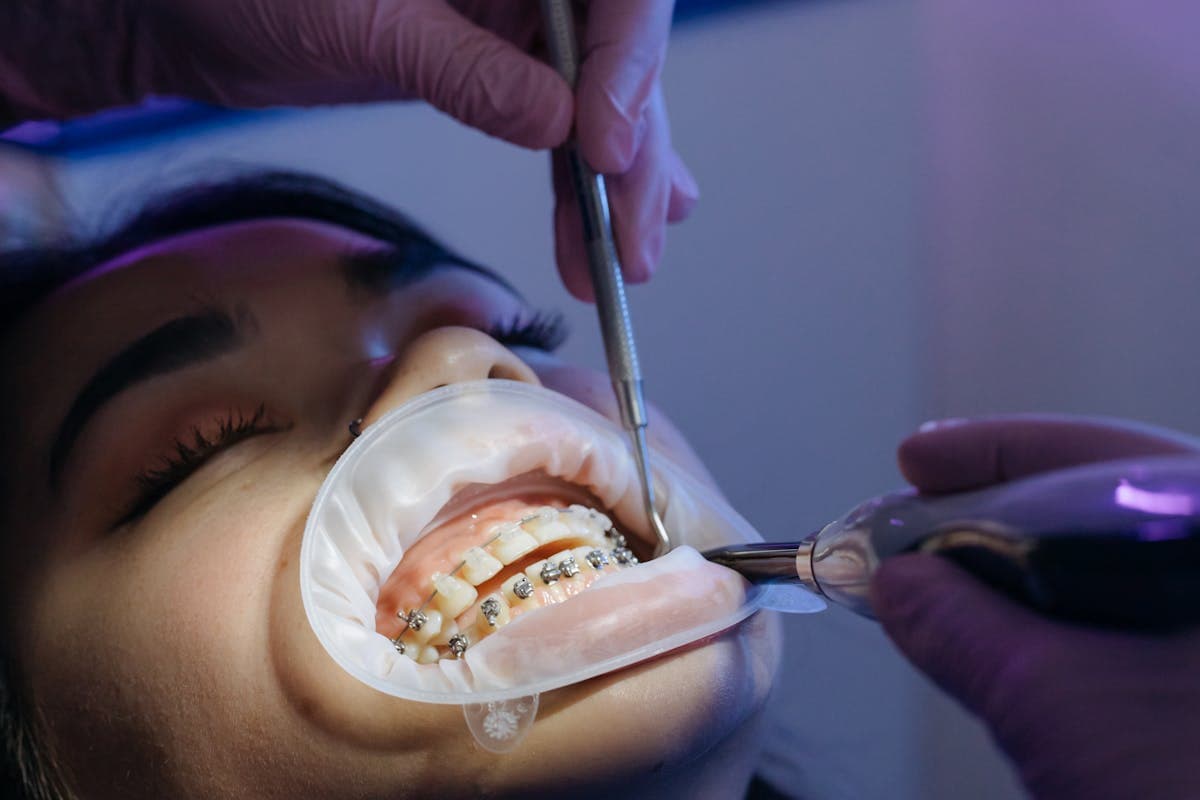
Braces and Orthodontics Aftercare: The Complete Guide to a Successful Treatment
Key Takeaways
- Orthodontic treatment lasts 12-24 months (braces) or 6-18 months (Invisalign)
- Broken brackets and cavities extend treatment time — proper hygiene is critical
- Avoid hard, sticky, and crunchy foods that can damage brackets and wires
- Soreness after adjustments is normal and lasts 3-5 days — use orthodontic wax for irritation
- Retainer wear after treatment is essential to prevent teeth from shifting back
Setting Up for Success: Why Orthodontic Aftercare Matters
Getting braces or starting Invisalign treatment is the beginning of a journey that will transform your smile - but the outcome depends as much on how you care for your teeth during treatment as on the orthodontic hardware itself. Every bracket that breaks, every cavity that develops, every missed appointment extends your treatment time and can compromise your final results.
Orthodontic treatment typically lasts 12-24 months for traditional braces and 6-18 months for Invisalign, depending on the complexity of your case. During this entire period, your teeth are being actively moved through bone - a biological process that requires consistent force and careful maintenance to proceed as planned.
The aftercare habits you develop from day one will determine whether your treatment stays on schedule, whether you maintain healthy teeth and gums throughout, and ultimately whether you achieve the best possible result. This guide covers every aspect of orthodontic aftercare, from the critical first week through the equally important retainer phase.
Many dental clinics now send automated aftercare reminders via WhatsApp to keep orthodontic patients on track throughout their treatment. Whether your practice sends reminders or not, this comprehensive guide serves as your complete aftercare reference.
The First Week: Adjusting to Braces
The first week with new braces is the most challenging period of your entire treatment. Your mouth is adapting to foreign objects on your teeth, your teeth are beginning to feel the first forces of movement, and you are learning entirely new eating and hygiene habits. It gets significantly easier after this initial adjustment.
What to Expect
- Soreness and aching: Your teeth will feel tender and achy, particularly when biting or chewing. This is the most common complaint and is completely normal - it means the braces are working. The discomfort typically peaks on days 2-3 and begins to subside by day 5-7.
- Soft tissue irritation: The brackets and wires will rub against the inside of your cheeks, lips, and possibly your tongue. This causes sore spots and sometimes small ulcers. Your mouth will toughen up over 2-3 weeks, but the first week can be uncomfortable.
- Difficulty eating: Between the soreness and the unfamiliar hardware, eating will be challenging for the first few days. This is temporary.
- Speech changes: Some patients, particularly those with lingual braces (braces on the back of the teeth) or certain appliances, notice a temporary lisp or change in speech. This resolves within 1-2 weeks as your tongue adapts.
- Excess saliva: Your mouth may produce extra saliva as it adjusts to the new hardware. This is temporary and resolves within a few days.
Managing First-Week Discomfort
- Over-the-counter pain relief: Ibuprofen (Advil, Motrin) or acetaminophen (Tylenol) can significantly reduce discomfort. Take as directed. Ibuprofen is particularly helpful because it addresses inflammation.
- Orthodontic wax: This is your best friend during the first week. Pinch off a small piece of wax, roll it into a ball, and press it over any bracket or wire that is irritating your cheek or lip. The wax creates a smooth barrier between the hardware and your soft tissue. Apply it to dry brackets for the best adhesion.
- Salt water rinses: Rinse with warm salt water (1/2 teaspoon salt in 8 ounces of warm water) 3-4 times daily. This soothes irritated tissue and promotes healing of any sore spots.
- Cold foods and drinks: Cold water, ice cream, frozen yogurt, and smoothies can provide temporary relief for sore teeth. The cold helps numb the area and reduce inflammation.
- Soft food diet: Stick entirely to soft foods for the first 3-5 days. Your teeth are at their most sensitive during this initial period.
First-Week Soft Food Ideas
- Yogurt, pudding, smoothies, milkshakes
- Mashed potatoes, mashed sweet potatoes
- Scrambled eggs, omelets
- Soup (cooled to a comfortable temperature)
- Oatmeal, cream of wheat
- Soft pasta with smooth sauce
- Applesauce, bananas, soft berries
- Soft bread, pancakes
- Steamed fish
- Hummus, mashed avocado
Daily Hygiene: The Non-Negotiable Foundation
Maintaining excellent oral hygiene with braces is both more important and more difficult than without them. Brackets, wires, bands, and elastics create countless nooks and crevices where food and plaque can accumulate. Without diligent cleaning, you risk:
- White spot lesions (decalcification): These are permanent white marks on your teeth that appear around brackets where plaque has sat for too long. They are the most common complication of orthodontic treatment and are entirely preventable with good hygiene.
- Cavities: The same plaque buildup that causes white spots can progress to full cavities.
- Gum disease (gingivitis): Plaque along the gum line causes inflammation, bleeding, and gum recession if not addressed.
- Bad breath: Food trapped in braces is the leading cause of bad breath in orthodontic patients.
How to Brush with Braces
Brushing with braces takes longer than brushing without them - plan for at least 3-4 minutes per session rather than the usual 2 minutes.
Step-by-step technique:
- Rinse first: Swish with water to dislodge loose food particles.
- Start at the gum line: Angle your toothbrush at 45 degrees toward the gum line and brush in small circular motions along the top of each bracket (between the bracket and the gum).
- Brush the brackets: Angle the brush downward to clean the top of each bracket, then upward to clean below each bracket. The bracket surface and the area immediately around it need direct attention.
- Brush the chewing surfaces: Clean the biting surfaces of your teeth as you normally would.
- Brush the inside surfaces: Clean the tongue side (lingual side) of all teeth.
- Use an interdental brush: These small, Christmas-tree-shaped brushes fit between brackets and under wires to clean areas your regular toothbrush cannot reach. Use them after brushing to get into tight spots around each bracket.
- Check your work: Look in the mirror and run your tongue over your teeth. The brackets and wires should look clean and shiny, not fuzzy or coated.
Brush after every meal - not just twice a day. When you have braces, every meal leaves food trapped in the hardware. If you cannot brush (for example, at school or work), at minimum rinse thoroughly with water.
How to Floss with Braces
Flossing with braces is more time-consuming but remains essential. The wire running between brackets prevents you from inserting floss the normal way.
Options for flossing with braces:
- Floss threaders: These are thin, flexible loops that help you thread floss under the archwire and between teeth. Thread the floss through the loop, insert the threader under the wire, pull the floss through, and floss normally between those two teeth. Repeat for each pair of teeth.
- Orthodontic flossers (Platypus flossers): These are specifically designed for braces and are faster than floss threaders.
- Water flosser (Waterpik): An excellent complement to traditional flossing. The water jet flushes debris from around brackets and between teeth effectively. Use it on a moderate setting - too high can be uncomfortable on sensitive gums. A water flosser does not fully replace traditional flossing but significantly improves cleaning effectiveness.
- Superfloss: This specialized floss has a stiff end for threading under wires, a spongy section for cleaning around brackets, and regular floss for between teeth.
Floss at least once daily, preferably before your evening brushing.
Additional Hygiene Tools
- Fluoride mouthwash: Rinse daily with a fluoride mouthwash to strengthen enamel and help prevent white spot lesions. Use it as the last step in your evening routine after brushing and flossing.
- Disclosing tablets: These chewable tablets temporarily stain plaque, showing you exactly where you are missing with your brushing. Use them once a week to audit your technique.
- Electric toothbrush: Many orthodontists recommend a quality electric toothbrush (like Oral-B or Sonicare) because they are more effective at cleaning around brackets than manual brushing. Use a soft brush head and let the brush do the work.
Foods to Avoid with Braces
Food restrictions are one of the biggest lifestyle adjustments with braces. The wrong foods can break brackets, bend wires, get stuck in hardware, and extend your treatment time. A single broken bracket can add weeks to your treatment.
Hard Foods: The Bracket Breakers
These foods can snap brackets off your teeth or bend the archwire:
- Nuts: Almonds, walnuts, peanuts, and all hard nuts
- Hard candy: Jawbreakers, lollipops, hard mints, candy canes
- Ice: Never chew ice with braces
- Popcorn: Kernels and unpopped pieces are notorious for breaking brackets
- Hard pretzels and chips: Thin, crunchy chips can catch on wires
- Raw vegetables: Carrots, celery, and other hard raw vegetables (cut into very small pieces instead of biting)
- Hard fruits: Apples and pears (slice thinly rather than biting into whole fruit)
- Corn on the cob: Cut corn off the cob
- Hard bread and crusty rolls: Bagels, baguettes, and pizza crust
- Bone-in meats: Ribs, chicken wings (remove meat from bone first)
Sticky Foods: The Wire Pullers
Sticky foods grab onto brackets and wires and can pull them loose:
- Caramel and toffee: Among the most common causes of broken brackets
- Gummy candy: Gummy bears, gummy worms, jelly beans
- Taffy and chewy candy: Starburst, Tootsie Rolls, licorice
- Chewing gum: Even sugar-free gum can stick to brackets (some orthodontists allow sugar-free gum - check with yours)
- Dried fruit: Dates, figs, dried mango, fruit leather
- Caramel apples: The combination of hard fruit and sticky caramel
Sugary Foods and Drinks: The Cavity Creators
Braces already make teeth harder to clean. Adding excess sugar dramatically increases cavity risk:
- Limit soda, sports drinks, energy drinks, and sweetened beverages
- Minimize candy, cookies, cakes, and other sugary snacks
- If you do consume sugar, brush as soon as possible afterward (or at minimum, rinse with water)
Safe Eating Strategies
- Cut food into small pieces: Instead of biting into a whole apple or sandwich, cut everything into bite-sized pieces and chew with your back teeth.
- Choose softer alternatives: Soft bread instead of crusty, steamed vegetables instead of raw, tender meats instead of tough.
- Chew with your back teeth: Your back teeth (molars) are stronger and less likely to have brackets break than your front teeth.
Soreness After Adjustments
Every orthodontic adjustment appointment involves tightening or changing wires, adjusting brackets, or modifying your treatment plan. After each adjustment, you will experience a period of soreness as your teeth respond to the new forces.
What to Expect
- Soreness typically begins 2-4 hours after the adjustment
- Pain peaks within 24-48 hours
- Discomfort gradually subsides over 3-5 days
- Each adjustment tends to cause less soreness than the one before as you get used to the sensation
- Some adjustments cause more soreness than others, depending on what was changed
Managing Post-Adjustment Soreness
- Take pain medication proactively: Take ibuprofen or acetaminophen before or immediately after your adjustment, rather than waiting for pain to develop.
- Eat soft foods for 2-3 days after each adjustment. Prepare soft meals ahead of time so you have easy options.
- Cold foods provide relief: Ice cream, frozen yogurt, cold smoothies, and cold water help numb sore teeth.
- Orthodontic wax: If any new wire or bracket is rubbing, apply wax immediately rather than waiting for a sore spot to develop.
- Salt water rinses: Warm salt water can soothe irritated gums and tissue.
- Avoid hard and chewy foods until the soreness subsides.
- Be patient: The soreness is temporary and means your treatment is progressing.
Emergency Care: Brackets, Wires, and Hardware Issues
Orthodontic emergencies are not life-threatening, but they can be uncomfortable and, if not addressed, can slow your treatment progress.
Broken Bracket
A bracket that has come loose from the tooth but is still attached to the wire:
- Do not try to pull it off the wire
- If it is not causing irritation, leave it and call your orthodontist at the next opportunity
- If it is rubbing against your cheek, apply orthodontic wax to smooth the surface
- Save any bracket that comes completely off and bring it to your next appointment
- A single broken bracket will not ruin your treatment, but it needs to be repaired at your next visit
Poking Wire
A wire that is sticking out and poking your cheek or gum:
- Try using the eraser end of a pencil to gently push the wire back against the tooth
- Apply orthodontic wax over the poking end to create a smooth surface
- If you cannot manage the wire and it is causing significant pain, use clean nail clippers to carefully clip the protruding wire as a last resort (only with your orthodontist's approval)
- Contact your orthodontist if the problem persists
Loose Band
An orthodontic band (metal ring around a molar) that feels loose:
- Contact your orthodontist - loose bands can trap food and cause decay if not re-cemented promptly
- Avoid sticky foods that could pull it further
Broken Archwire
If the main archwire breaks:
- Apply wax to any sharp edges
- Contact your orthodontist as soon as possible - a broken archwire means your teeth are not receiving the corrective forces they need
- Do not attempt to remove the wire yourself
Lost Elastic (Rubber Band)
If a prescribed elastic breaks or falls out:
- Replace it with a new one from your supply
- If you have run out, call your orthodontist for more
- Do not stop wearing elastics without your orthodontist's instruction - consistent wear is critical for treatment progress
When to Call Your Orthodontist
- A bracket or band has come completely off
- A wire is causing significant pain that wax cannot manage
- You notice an unusual swelling or infection around a bracket
- A piece of hardware has been swallowed (this is almost always harmless, but inform your orthodontist)
- An appliance feels broken or loose
- Severe, unmanageable pain
Invisalign Specific Aftercare
Invisalign and clear aligner treatment offers a different set of aftercare considerations compared to traditional braces. While you avoid many of the food restrictions and bracket emergencies, compliance and hygiene remain equally important.
Wear Time
- Wear your aligners 20-22 hours per day. This is the single most important factor in your treatment success. Aligners only work when they are in your mouth.
- Only remove aligners for eating, drinking anything other than cool water, and brushing/flossing.
- Track your wear time if needed - there are apps and timers designed for aligner wear tracking.
- If you consistently wear your aligners less than 20 hours per day, your teeth will not move as planned and your treatment will be extended.
Aligner Hygiene
- Rinse aligners every time you remove them. Bacteria and saliva dry on the surface and create odor and cloudiness.
- Clean aligners twice daily: Use a soft toothbrush with clear, unscented liquid soap (not toothpaste, which is abrasive and can scratch aligners, making them cloudy). Brush gently inside and out.
- Soak aligners weekly: Use Invisalign cleaning crystals, retainer cleaning tablets (like Retainer Brite), or a mixture of lukewarm water and white vinegar for a deeper clean.
- Never use hot water on aligners. Heat warps the plastic and ruins the fit.
- Store aligners in their case when not wearing them. Never wrap them in a napkin - this is the most common way aligners get accidentally thrown away.
Eating and Drinking with Invisalign
- Remove aligners before eating anything. Eating with aligners in damages them and traps food particles between the aligner and your teeth, dramatically increasing cavity risk.
- You can drink cool water with aligners in. All other beverages should be consumed with aligners out.
- Coffee, tea, and colored drinks will stain aligners if you drink them with the aligners in place.
- Hot beverages will warp the aligner plastic.
- After eating, brush and floss before reinserting aligners. If you cannot brush, at minimum rinse your mouth thoroughly with water.
Aligner Changes
- Change to new aligners on schedule - typically every 1-2 weeks as prescribed by your orthodontist.
- Switch to new aligners at night: This allows you to sleep through the initial tightness and discomfort of a new set.
- Keep your previous set of aligners as a backup in case your current set is lost or damaged.
- Some mild soreness with each new aligner is normal - it means the teeth are being moved to their next position.
Attachments (Buttons)
Many Invisalign patients have small, tooth-colored composite attachments bonded to certain teeth. These provide grip points for the aligner to move teeth more effectively.
- Brush carefully around attachments to prevent staining or plaque buildup
- If an attachment falls off, contact your orthodontist - it may need to be rebonded
- Attachments are removed when treatment is complete
Retainer Aftercare: Protecting Your Results
The retainer phase is arguably the most important part of your entire orthodontic journey. Without consistent retainer wear, your teeth will gradually shift back toward their original positions - a process called relapse. All the time, effort, and investment in your orthodontic treatment can be undone by inconsistent retainer wear.
Types of Retainers
- Hawley retainer: A removable retainer with a metal wire across the front teeth and an acrylic plate that sits against the roof of your mouth (or behind your lower teeth). Durable and adjustable.
- Clear retainer (Essix/Vivera): A transparent, removable retainer that looks similar to an Invisalign aligner. More aesthetically pleasing but less durable than Hawley retainers.
- Fixed/bonded retainer: A thin wire permanently bonded to the back of your front teeth (usually lower). Provides continuous retention without any patient compliance needed, but requires careful cleaning around the wire.
Retainer Wear Schedule
Your orthodontist will prescribe a specific wear schedule, but the typical progression is:
- Months 1-6 after braces removal: Full-time wear (20-22 hours per day, removing only for eating and cleaning)
- Months 6-12: Nighttime wear only (every night)
- Year 2 and beyond: Nighttime wear every night or as prescribed by your orthodontist. Many orthodontists now recommend nighttime retainer wear indefinitely.
Critical rule: When in doubt, wear your retainer more rather than less. Teeth have a strong tendency to shift, particularly in the first year after braces removal.
Retainer Care
- Removable retainers: Clean daily with a soft toothbrush and clear liquid soap or retainer cleaner. Do not use toothpaste (too abrasive). Rinse with cool water only - hot water warps plastic. Store in the provided case when not wearing. Never wrap in a napkin.
- Fixed retainers: Floss daily using a floss threader or superfloss to clean under and around the wire. Use an interdental brush to clean around the bonded areas. During dental cleanings, have your hygienist carefully clean around the fixed retainer.
- Replace when needed: Clear retainers wear out and need replacement every 6-12 months with regular use. Hawley retainers last longer but may need adjustment. Report any cracks, breaks, or fit issues to your orthodontist promptly.
What to Do If Your Retainer Breaks or Is Lost
- Contact your orthodontist immediately to arrange a replacement
- If you have a previous set of clear retainers or aligners, wear those temporarily to prevent shifting
- The longer you go without wearing a retainer, the more your teeth will shift
- If significant shifting has occurred, you may need a new retainer made from fresh impressions, or in some cases, a short course of re-treatment
Treatment Timeline Expectations
Understanding the full timeline helps set realistic expectations and maintain motivation throughout treatment.
Traditional Braces Timeline
| Phase | Duration | What Happens |
|---|---|---|
| Initial alignment | Months 1-6 | Teeth are moved into rough alignment, crowding is resolved |
| Bite correction | Months 6-12 | Bite relationship is corrected, spaces are closed |
| Fine-tuning | Months 12-18 | Final positioning and detailing |
| Finishing | Months 18-24 | Final adjustments, debond preparation |
| Retention | Indefinite | Retainer wear to maintain results |
Average total treatment: 18-24 months for moderate cases. Simple cases may be 12 months; complex cases may extend to 30+ months.
Invisalign Timeline
| Phase | Duration | What Happens |
|---|---|---|
| Initial aligners | Months 1-6 | Major tooth movements begin |
| Mid-course | Months 6-12 | Progress check, possible refinement aligners |
| Refinements | Months 12-18 | Fine-tuning with additional aligner sets |
| Retention | Indefinite | Retainer wear to maintain results |
Average total treatment: 12-18 months for moderate cases. Simple cosmetic cases may be 6 months; complex cases may extend to 24+ months.
Factors That Extend Treatment Time
- Broken brackets (each break can add 1-2 weeks)
- Missed appointments
- Poor elastic wear compliance
- Insufficient Invisalign wear time (less than 20 hours/day)
- Cavities or gum disease requiring treatment during orthodontics
- Complex tooth movements that take longer than anticipated
Orthodontic Aftercare FAQ
How long will my teeth be sore after getting braces?
Initial soreness after getting braces typically lasts 5-7 days, with the worst discomfort on days 2-3. After adjustment appointments, soreness usually lasts 3-5 days. Most patients find that subsequent adjustments cause less discomfort than the initial placement as they become accustomed to the sensation. Over-the-counter pain medication, soft foods, and cold drinks are effective strategies for managing this temporary discomfort.
Can I play sports with braces?
Yes, but you should wear an orthodontic mouth guard during any contact sport or activity where you could be hit in the face. Standard "boil-and-bite" mouth guards can work, but custom orthodontic mouth guards from your dentist provide the best protection. They are designed to fit over braces without damaging brackets. Always wear a mouth guard for basketball, football, soccer, martial arts, hockey, and similar sports.
What happens if I swallow a bracket or piece of wire?
Swallowing small orthodontic components is not common but does occasionally happen. In the vast majority of cases, the piece passes through the digestive system without any issue. Inform your orthodontist so they know a component is missing, and call your doctor if you experience any abdominal pain, difficulty swallowing, or breathing issues. If you think you may have inhaled (aspirated) rather than swallowed the piece, seek medical attention immediately.
How often should I see my orthodontist?
Adjustment appointments are typically scheduled every 4-8 weeks, depending on your treatment plan and the type of braces or aligners you have. These appointments are essential for monitoring progress, making adjustments, and addressing any issues. Missing appointments extends your treatment time.
Do I still need to see my regular dentist during orthodontic treatment?
Absolutely. Continue seeing your general dentist for check-ups and cleanings every 6 months (or more frequently if recommended). Your general dentist monitors your teeth for cavities, evaluates gum health, and performs professional cleanings that are especially important when wearing braces. Orthodontic treatment does not replace regular dental care.
Automate Your Orthodontic Aftercare Follow-Up
If you run an orthodontic or dental practice, you know that patient compliance is the single biggest variable in treatment outcomes. Patients forget their elastic wear, skip brushing after meals, eat foods that break brackets, and stop wearing their retainers too early. PostCare automates your orthodontic aftercare messaging via WhatsApp, sending timed reminders for hygiene routines, food restriction reminders, post-adjustment care tips, retainer wear schedules, and appointment reminders throughout the entire treatment journey - from the first day of braces through the critical retainer phase. Discover how PostCare helps dental clinics achieve better orthodontic compliance, fewer broken brackets, and more successful treatment outcomes.
Related Reading
- What Is Aftercare? The Complete Guide for Clinics and Practitioners
- Dental Implant Aftercare: The Complete Guide
- How to Reduce Post-Treatment Phone Calls by 60%
- 7 Best Aftercare Software for Clinics in 2026 (Compared)
- Teeth Whitening Aftercare: Protect Your Brighter Smile
Are you a practitioner? If you provide this treatment and want to automate aftercare instructions for your clients via WhatsApp, PostCare sends the right message at the right time — so your clients heal better and you save hours every week. Start your free trial.
Stop printing aftercare guides
Automate sending personalized aftercare instructions to every client via WhatsApp.